
How to start: our process always starts with a consultation.
Go to this link and provide relevant information: Free Australian Visa Assessment
Book under: ‘04. Migration Law - In-depth assessments and adv - 1 hr’
Core Skills Occupation List (CSOL).Update on 04 December 2024 Migration Amendment (2024 Measures No. 1) Regulations 2024. Commencement: 7 December 2024. |
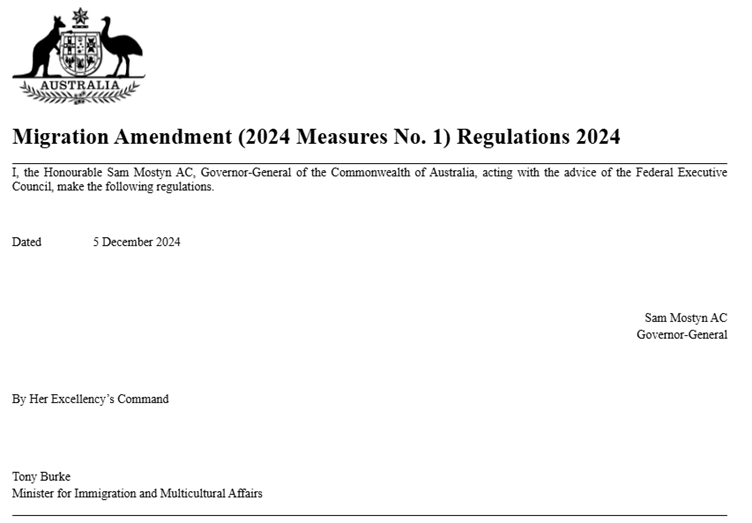
The Australian Government announced the release of the Core Skills Occupation List (CSOL).
The Core Skills Occupation List (CSOL) will apply to the Core Skills stream of the new Skills in Demand visa, of which will replace the Temporary Skill Shortage (subclass 482) visa. The CSOL will also apply to the Direct Entry stream of the permanent Employer Nomination Scheme (subclass 186) visa.
The CSOL includes 70 new occupations that were not previously available for the TSS visa, including new occupations in the health, childcare, education, construction and cyber sectors.
The CSOL has more than 450 occupations in sectors such as:
- construction
- cyber security
- agriculture
- health.
Key additions include:
Technology and Cybersecurity
- Cyber Security Engineer
- DevOps Engineer
- Data Scientist
- Penetration Tester
- Cyber Security Analyst
Agriculture and Aquaculture
- Aquaculture or Fisheries Scientist
- Irrigation Designer
- Animal Husbandry Technician
Skilled Trades
- Furniture Maker
- Fire Protection Plumber
- Irrigation Technician
Emerging Roles
- Content Creator (Marketing)
- Supply Chain Analyst
- Regulatory Affairs Manager
Individual Codes for:
- Agronomist (previously under Agricultural Scientist).
- Respiratory Technician (formerly Medical Technicians NEC).
- Tree Worker (previously classified under Arborist).
Occupations Removed from the CSOL
While the CSOL introduces exciting opportunities, several roles from the SOL have been excluded, including:
- Café or Restaurant Manager
- Fashion Designer
- Copywriter
- Chiropractor
- Nutritionist
The Subclass 482 (Skills in Demand) visa replaces the Subclass 482 (Temporary Skill Shortage) visa as of 7 December 2024.
Holders of, the new Skills in Demand (SID) visa will have a pathway to permanent residence through the temporary residence transition (TRT) stream of the subclass 186 Employer Nomination Scheme (ENS), in which all periods of sponsored employment can count towards permanent residence.
Reduce the minimum relevant work experience requirement for applicants for the Skills in Demand visa from two years (the current requirement for the Temporary Skill Shortage visa) to one year of full-time employment, or equivalent, within the five years that immediately preceded the date of the visa application.
The Amendment Regulations provide for all nominations and visa applications for a Temporary Skill Shortage visa made before the commencement of the amendments of the Migration Regulations to be processed using the requirements that were in force at the time that the application was made.
08/12/2024 Update
Occupations not included in the CSOL were not supported by labour market analysis. Applicants may consider other pathways under which these occupations may be available, including the Specialist Skills or Labour Agreement streams of the SID visa.
If the relevant occupation is not on the Core Skills Occupation List (CSOL) or does not qualify for the Specialist Skills stream, the applicant will not have a pathway to change employer. These individuals will be able to utilise the strengthened mobility provisions to find work in a new occupation, apply for another visa or depart Australia. This ensures that the temporary skilled migration system is best targeted at occupations in current demand.
What happens to nominations and visa applications lodged before 07/12/2024
- The Amendment Regulations do not operate retrospectively.
- The Amendment Regulations provide for all nominations and visa applications for a Temporary Skill Shortage visa made before the commencement of the amendments of the Migration Regulations to be processed using the requirements that were in force at the time that the application was made.
If a nomination has been lodged but no visa before the 07/12/2024
If an employer has lodged a nomination for a Temporary Skill Shortage visa that was not
accompanied by a corresponding application for the visa before the amendments commence, the applicant would be able to “link” this nomination to the new Skills in Demand visa until the original nomination period of 12 months ceases.
The information noted below may be outdated as of 04 12 2024
Visas applicable to the OLD Skilled Occupation Lists PRIOR to December 2024
Visas applicable to the Skilled Occupation Lists
The following visas are available to individuals who are qualified to work or train in an eligible skilled occupation in Australia and can meet all other requirements:
- Employer Nomination Scheme (ENS) visa (subclass 186)
- Regional Sponsored Migration Scheme (RSMS) visa (subclass 187)*
- Skilled Independent visa (subclass 189) – Points-tested stream
- Skilled Nominated visa (subclass 190)
- Training visa (subclass 407)
- Temporary Skill Shortage (TSS) visa (subclass 482)
- Temporary Graduate visa (subclass 485) – Graduate Work
- Skilled Regional (Provisional) visa (subclass 489)
- Skilled Work Regional (Provisional) visa (subclass 491)
- Skilled Employer Sponsored Regional (provisional) visa (subclass 494).
Skilled occupation has the meaning given by regulation 1.15I.
Reg 1.15I Skilled occupation
- A skilled occupation, in relation to a person, means an occupation of a kind:
- that is specified by the Minister in an instrument in writing to be a skilled occupation; and
- if a number of points are specified in the instrument as being available — for which the number of points are available; and
- that is applicable to the person in accordance with the specification of the occupation.
- Without limiting subregulation (1), the Minister may specify in the instrument any matter in relation to an occupation, or to a class of persons to which the instrument relates, including:
- that an occupation is a skilled occupation for a class of persons;
- that an occupation is a skilled occupation for a person who is nominated by a State or Territory government agency.
Occupations available for the skilled visa and Legislative instruments
The table below provides information on the formal legislative instrument(s) which specify the occupations available for the skilled visa types listed.
Priority Migration Skilled Occupation List
The Priority Migration Skilled Occupation List (PMSOL) identifies 44 occupations which fill critical skills needs to support Australia’s economic recovery from COVID-19. The list is based on expert advice from the National Skills Commission and consultation with Commonwealth departments.
Employer sponsored nomination and visa applications with an occupation on the PMSOL will be given priority processing. All other skilled occupation lists will remain active, but the PMSOL occupations will take priority.
The list is temporary and priority occupations may change as Australia recovers from the pandemic.
The Priority Migration Skilled Occupation List [PMSOL]
The 41 occupations (ANZSCO code) are:
- Chief Executive or Managing Director (111111)
- Construction Project Manager (133111)
- Accountant (General) (221111)*
- Management Accountant (221112)*
- Taxation Accountant (221113)*
- External Auditor (221213)*
- Internal Auditor (221214)*
- Surveyor (232212)*
- Cartographer (232213)*
- Other Spatial Scientist (232214)*
- Civil Engineer (233211)*
- Geotechnical Engineer (233212)*
- Structural Engineer (233214)*
- Transport Engineer (233215)*
- Electrical Engineer (233311)*
- Mechanical Engineer (233512)
- Mining Engineer (excluding Petroleum) (233611)*
- Petroleum Engineer (233612)*
- Medical Laboratory Scientist (234611)*
- Veterinarian (234711)
- Hospital Pharmacist (251511)*
- Industrial Pharmacist (251512)*
- Retail Pharmacist (251513)*
- Orthotist or Prosthetist (251912)*
- General Practitioner (253111)
- Resident Medical Officer (253112)
- Psychiatrist (253411)
- Medical Practitioners nec (253999)
- Midwife (254111)
- Registered Nurse (Aged Care) (254412)
- Registered Nurse (Critical Care and Emergency) (254415)
- Registered Nurse (Medical) (254418)
- Registered Nurse (Mental Health) (254422)
- Registered Nurse (Perioperative) (254423)
- Registered Nurses nec (254499)
- Multimedia Specialist (261211)*
- Analyst Programmer (261311)*
- Developer Programmer (261312)
- Software Engineer (261313)
- Software and Applications Programmers nec (261399)*
- ICT Security Specialist (262112)*
- Social Worker (272511)
- Maintenance Planner (312911)
- Chef (351311)*
* Indicates occupation added in July 2021
Employer sponsored visa subclasses for PMSOL occupations
Priority processing of nomination and visa applications for PMSOL occupations applies to these employer sponsored visa subclasses:
- Temporary Skill Shortage (TSS) visa (subclass 482)
- Skilled Employer Sponsored Regional (Provisional) visa (subclass 494)
- Employer Nomination Scheme (ENS) visa (subclass 186)
- Regional Sponsored Migration Scheme (RSMS) visa (subclass 187)
Top 20 occupations in demand nationally - Australia
| No. | Occupation | IVI job ads* |
| 1 | Registered Nurses | 8,377 |
| 2 | Software and Applications Programmers | 6,269 |
| 3 | Aged and Disabled Carers | 4,642 |
| 4 | Child Carers | 4,277 |
| 5 | Construction Managers | 4,230 |
| 6 | Motor Mechanics | 3,924 |
| 7 | Retail Managers | 3,777 |
| 8 | Chefs | 3,725 |
| 9 | Generalist Medical Practitioners | 3,352 |
| 10 | Metal Fitters and Machinists | 3,137 |
| 11 | ICT Business and Systems Analysts | 3,053 |
| 12 | Civil Engineering Professionals | 2,871 |
| 13 | Electricians | 2,839 |
| 14 | Early Childhood (Pre-primary School) Teachers | 2,493 |
| 15 | Contract, Program and Project Administrators | 2,392 |
| 16 | Advertising and Marketing Professionals | 2,265 |
| 17 | Physiotherapists | 1,262 |
| 18 | Gardeners | 1,015 |
| 19 | Mining Engineers | 957 |
| 20 | Database and Systems Administrators, and ICT Security Specialists | 942 |